Three-Point Shot Quality Gets a Closer Look: What to Verify Before Trusting Shooting Metrics
The highlight reel makes every deep three look like the same product. A guard steps back, rises, and the net moves exactly the way the broadcaster wants it to. But anyone who watches basketball closely knows the distance between a manufactured three-pointer and a fortunate one. The real problem is that most public analysis, and many sports betting pages, compress all of that detail into a single shooting percentage. That is why three-point shot quality deserves a more careful read than it usually gets.
Why one number never tells the whole story
Shooting percentage from beyond the arc is the first number everyone checks, and it is also the most incomplete. Two players can shoot exactly 38% from deep and be completely different offensive players. One takes only wide-open corner threes after the defense collapses on a teammate; the other creates tough step-back looks against heavy contests. Their percentage is identical, but the value of their shots, and the likelihood that the percentage holds up, could not be more different.
This matters beyond player comparisons. Defenses, lineups, and even entire teams are judged by three-point numbers that were never designed to capture how difficult each attempt actually was. Without a quality filter, a player who shoots 32% on very difficult looks can be more valuable than a teammate who shoots 36% on easy ones, simply because the harder shots pull defenders out of position and create space for everyone else.
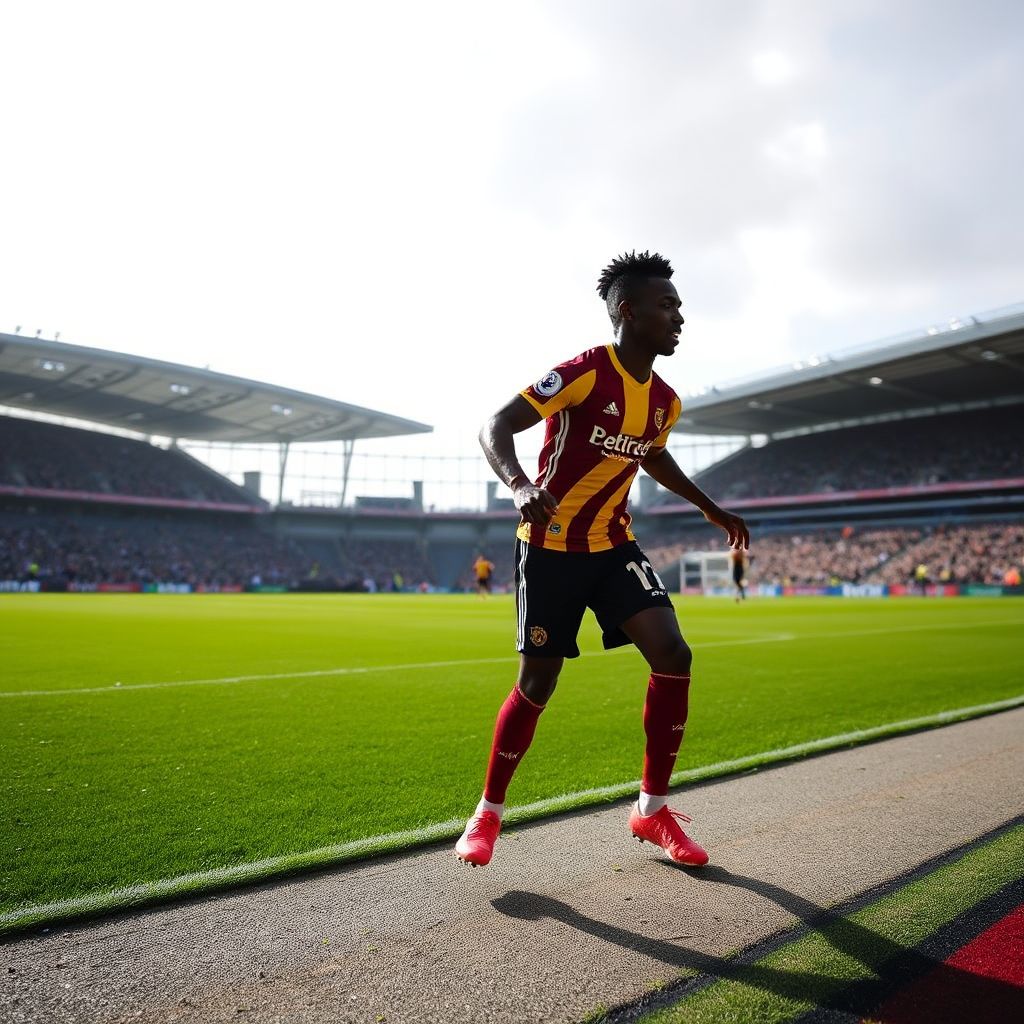
 Hình minh hoạ: uk88
What counts as a quality three-point attempt
Shot quality is not a single agreed-upon statistic. Different data providers weigh different ingredients, but most serious evaluations include at least a few basic factors:
- Contest level: whether a defender is close, closing out, or completely out of the play.
- Shot type: catch-and-shoot attempts tend to be more predictable than off-the-dribble threes, so mixing them together hides efficiency.
- Location: corner threes are shorter and generally easier than above-the-break attempts.
- Creation context: whether the shooter generated the shot alone or received it from an assist.
- Game state: attempts in garbage time or late-clock heaves distort percentages.
The term “shot quality” is only useful when these components are separated. The moment a platform or an analyst folds everything into one number, the analysis loses most of its explanatory power.

A checklist for verifying any shooting claim
When reading a bold claim about a player’s three-point ability, whether it comes from a media outlet, a team press release, or a betting breakdown, run it through this checklist. If the claim fails several items, the conclusion should be treated as incomplete rather than authoritative.
- Check the sample size. A hot stretch of 40 attempts means almost nothing. Most shot-quality models only begin to trust a player’s split after 150 to 200 attempts, and even then the margin for error is wide.
- Separate catch-and-shoot from off-the-dribble. A player who shoots 42% on catch-and-shoot looks elite until someone reveals that he barely attempts any. The volume of each shot type changes how the percentage should be interpreted.
- Ask how the defense treated the shot. Wide-open attempts, contested attempts, and tightly contested attempts are different skills entirely. A number without contest information is incomplete.
- Distinguish corner threes from above-the-break threes. The shorter corner distance makes a meaningful difference. Players who live in the corner are often efficient but not necessarily elite shooters from the rest of the arc.
- Subtract heaves and end-of-quarter desperation shots. These attempts tank percentages without reflecting real shooting ability. Some public databases remove them; many do not.
- Look at the timeline. Was the percentage built in one month or across a full season? Defenses adjust, fatigue builds, and the second half of a season tells a different story than the first.
- Identify the data source. Tracking data from different providers does not always agree on what counts as a contested shot. A claim based on one source should be checked against another before it becomes a firm conclusion.

Where the eye test tricks even veteran viewers
Fans who have watched basketball for decades often trust their eyes over spreadsheets, and they are right more often than some analytics people admit. But there is a specific way the eye test fails on three-point shooting: perception of form is mistaken for perception of efficiency. A player with a beautiful, high-release jumper can look like a sniper while converting at a mediocre rate. Another player with an ugly, shoulders-first delivery can be quietly elite because the release is quick and the shot selection is intelligent.
The same confusion happens in reverse. A cold-shooting night can look like terrible shot selection to a casual viewer, even when every attempt was genuinely open and generated by the offense exactly as designed. Over time, those open looks convert at predictable rates, but the human brain reads a single game’s misses as a skill problem.
Deconstructing the claims you see on sports betting and analytics pages
Advertising language around advanced analytics is now everywhere. Promotions for betting sites and analysis platforms routinely promise “accurate shot quality ratings”, “elite shooting profiles”, or “high-quality volume” without ever defining what those terms mean. They lean on the authority of data science while skipping the methodology.
When a claim like that appears, the verification checklist from the previous section should be applied line by line. Does the platform explain how many attempts were analyzed? Is there a distinction between shot types? Can the underlying method be inspected? If the answer to any of those questions is no, the claim is marketing, not insight. Sports-focused platforms such as uk88 carry their share of analytical content about basketball, and the same scrutiny applies there. Treat every shooting metric as a hypothesis to test, not as a verdict to accept.
Frequently asked questions
What is the most important factor in three-point shot quality?
Most experienced analysts would point to the relationship between shot type and contest level. A wide-open catch-and-shoot three is the highest-value attempt for most players, while a contested step-back three only makes sense for a small group of elite shot creators.
How many three-point attempts do you need before a percentage is reliable?
There is no universal cutoff, but a few weeks of hot shooting is never enough. Splits based on 50 or fewer attempts should be ignored unless the question is about extremely narrow situations. Full-season samples are the minimum for serious discussion, and multi-season data is much better.
Are corner threes always better than above-the-break threes?
They are generally easier because the distance is shorter and the geometry of the rebound is simpler. However, a team can become too predictable if it only shoots from the corners. Above-the-break shooting spaces the floor differently and is often more valuable for the offense as a whole, even at a slightly lower conversion rate.
Key risks to remember
The biggest risk in three-point analysis is over-interpreting small samples. A player can shoot 50% from deep over two weeks while taking terrible shots, and another player can shoot 30% while creating perfect looks. The second player is the better bet over a long season, but a careless headline will make you believe the opposite.
The second risk is trusting any single metric, no matter how advanced it sounds. Shot quality models are improving, but they still miss context: fatigue, defensive schemes, play-calling tendencies, and the simple fact that even great shooters go through regression. Use these numbers as a lens, not as a guarantee.
Finally, when betting angles enter the picture, remember that no shooting statistic promises any outcome in a single game or even a single series. Bankroll limits and risk awareness matter far more than any analytic edge. The deeper the look, the more careful the bettor and the fan should become. For the full breakdown, visit https://uk88z.se.net/.